Australia's Favourite Bananas australia Bananas nutrition review: score, additives, and swaps
Australia's Favourite Bananas australia Bananas are natural fruit rich in fiber and potassium.
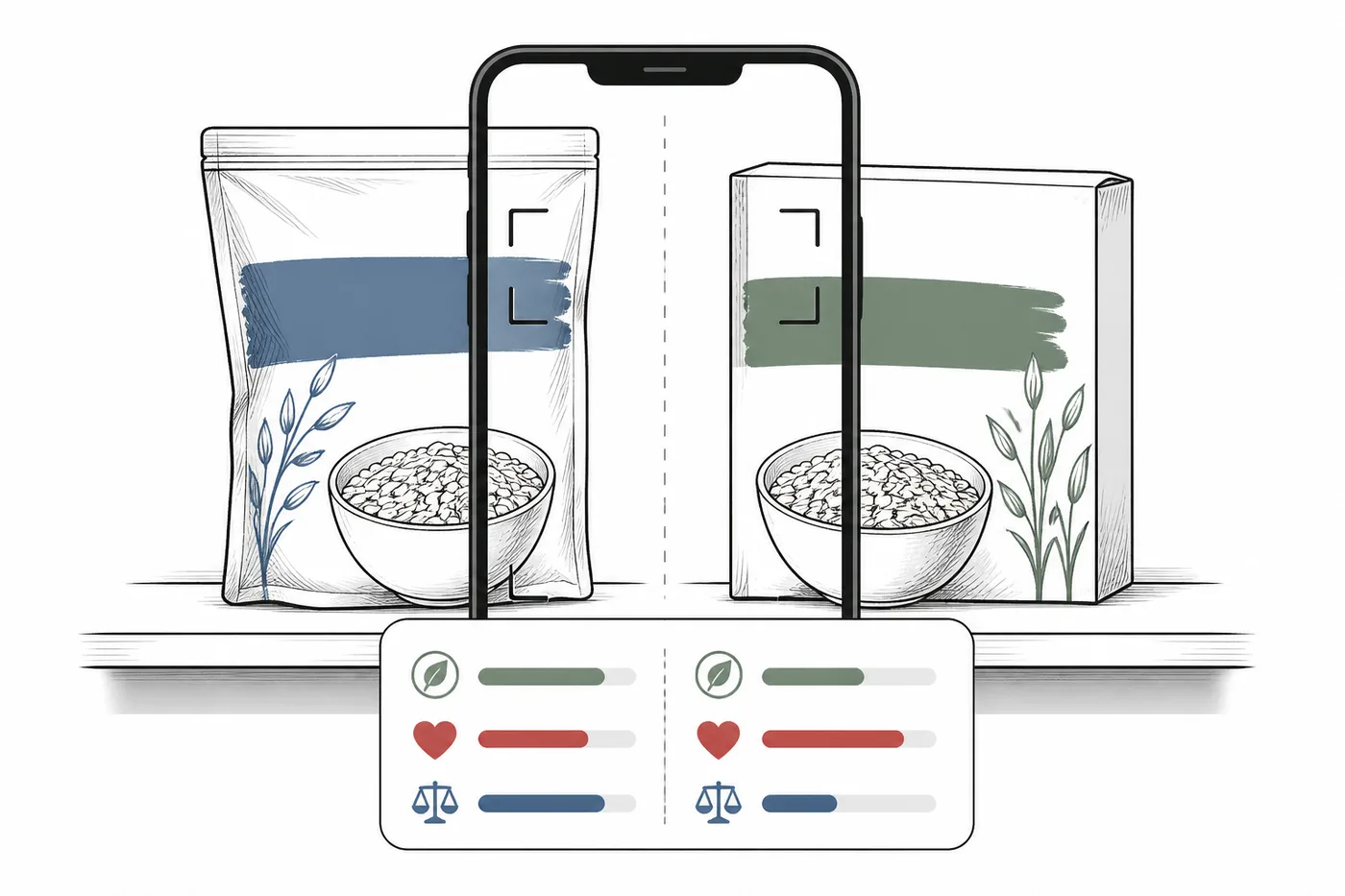
Blume score
Strong score - produce fruits
This report uses Blume product data, ingredient notes, and FDA label-reading rules. It is general shopping context, not medical advice.
Short answer
Whole fresh fruit with natural nutrients and fiber, minimal processing.
Answers people search for
is Australia's Favourite Bananas australia Bananas healthy
Yes, bananas are generally a healthy produce choice. They provide carbohydrates, fiber, and potassium, and the product facts here do not show preservatives or GMO concerns.
Australia's Favourite Bananas australia Bananas ingredients
As a fresh fruit item, the meaningful component listed is bananas themselves. The supplied data also shows nutrients like potassium, dietary fiber, iron, calcium, calories, cholesterol, and added sugars.
Australia's Favourite Bananas australia Bananas nutrition
The supplied data identifies bananas as a source of potassium, dietary fiber, and carbohydrates. No exact numbers are provided here, so the safest takeaway is that this is a naturally nutrient-containing fruit rather than a packaged nutrition product.
is produce fruits bad for you
No, fruit is generally not bad for you. For most people, produce is one of the more beneficial food groups because it brings fiber, vitamins, and minerals with little processing.
Why the score landed there
- Contains only natural banana fruit
- Good source of dietary fiber and potassium
- No added sugars or artificial additives
- No saturated fats or artificial ingredients
Ingredient risk map
Ingredient notes
Bananas
This is the actual food here, and it provides potassium, fiber, and carbohydrate for energy. It is a simple fruit, not a heavily processed product.
Potassium
Bananas are known for potassium, which helps with electrolyte balance. People with kidney issues may need to be more careful with intake.
Dietary Fiber
Fiber supports fullness and digestive health. Whole fruit is usually more useful than juice because the fiber stays with the fruit.
Added Sugars
The component list includes added sugars as a label field, but that does not mean the fruit itself is sweetened. Fresh bananas naturally contain sugar.
Calcium
Calcium is listed in the data, but bananas are not usually thought of as a major calcium source.
What to compare in store
- If you want a snack that is naturally sweet, compare bananas with packaged bars or sweets that add sugar and additives.
- If you want more fiber, compare whole fruit with juice or fruit-flavored drinks.
- If you are managing potassium, compare bananas with lower-potassium fruits before making them a frequent choice.
- If you care about processing, compare fresh produce with packaged snack foods that carry oils, sweeteners, and flavor additives.
Better label signals
- No preservatives is a good sign for a fresh produce item.
- Low glyphosate risk is a reassuring signal for shoppers who look at crop handling factors.
- Clean Fifteen status can matter for people choosing produce with less concern about residue exposure.
- No GMO, no local, and no farm-identification details do not change the food itself, but they do suggest the app has limited sourcing detail here.
Scan the label before you buy.
Blume reads food labels, flags ingredients, and gives each product a plain-English score so you can compare options in the aisle.
Download BlumeFAQ
Are bananas good for you?
For most people, yes. They are a simple fruit with fiber, potassium, and carbohydrates, which makes them a practical everyday food.
Can bananas be bad for you?
Only in certain situations, like if you need to limit potassium because of kidney problems or if you are sensitive to bananas. For most people, they are not a problem.
Are bananas processed?
No, not in the way packaged snack foods are processed. This is fresh produce, though storage and handling still matter.
Sources and method
Product and ingredient signals come from the Blume product database. The label-reading context below is included on every product report so the article stays tied to public food-label rules.
- FDA Daily Value guide: The FDA says 20% DV or more is high and 5% DV or less is low for a nutrient on the Nutrition Facts label.
- FDA ingredient list guide: The FDA explains that ingredients are listed in descending order by weight on food labels.
- FDA major allergen update: Sesame became the ninth major food allergen in the United States on January 1, 2023.
- FAO NOVA classification overview: The NOVA system classifies foods by the extent and purpose of processing.