Is Cadbury Caramello Milk Chocolate & Creamy Caramel healthy? Ingredients and Blume score
Cadbury Caramello Milk Chocolate has high sugar and saturated fat, plus artificial ingredients, making it a less healthy choice.
Blume score
Very low score - chocolate
This report uses Blume product data, ingredient notes, and FDA label-reading rules. It is general shopping context, not medical advice.
Short answer
High in sugar and saturated fat, heavily processed chocolate with artificial flavors and multiple additives.
Answers people search for
Is Cadbury Caramello Milk Chocolate & Creamy Caramel healthy?
Cadbury Caramello Milk Chocolate & Creamy Caramel scores 13/100 in Blume, which puts it in the very low range. That does not mean one serving is dangerous, but it does mean the label has tradeoffs worth comparing.
Cadbury Caramello Milk Chocolate & Creamy Caramel ingredients?
The ingredients worth slowing down for are Sodium Bicarbonate (Baking Soda), E500 (Sodium Bicarbonate), Cocoa Butter, E500II (Sodium Carbonate). Scan the full label because ingredient order and serving size can change how the product fits your diet.
Cadbury Caramello Milk Chocolate & Creamy Caramel nutrition label?
Use the Nutrition Facts panel as the tie-breaker. The FDA's 5% and 20% Daily Value rule is a useful shortcut: 5% DV is low, while 20% DV is high for a nutrient.
Cadbury Caramello Milk Chocolate & Creamy Caramel calories and sugar?
Use the Nutrition Facts panel as the tie-breaker. The FDA's 5% and 20% Daily Value rule is a useful shortcut: 5% DV is low, while 20% DV is high for a nutrient.
Why the score landed there
- Very high sugar content (58g per 100g)
- High saturated fat level
- Contains artificial flavorings
- Ultra-processed NOVA 4 product
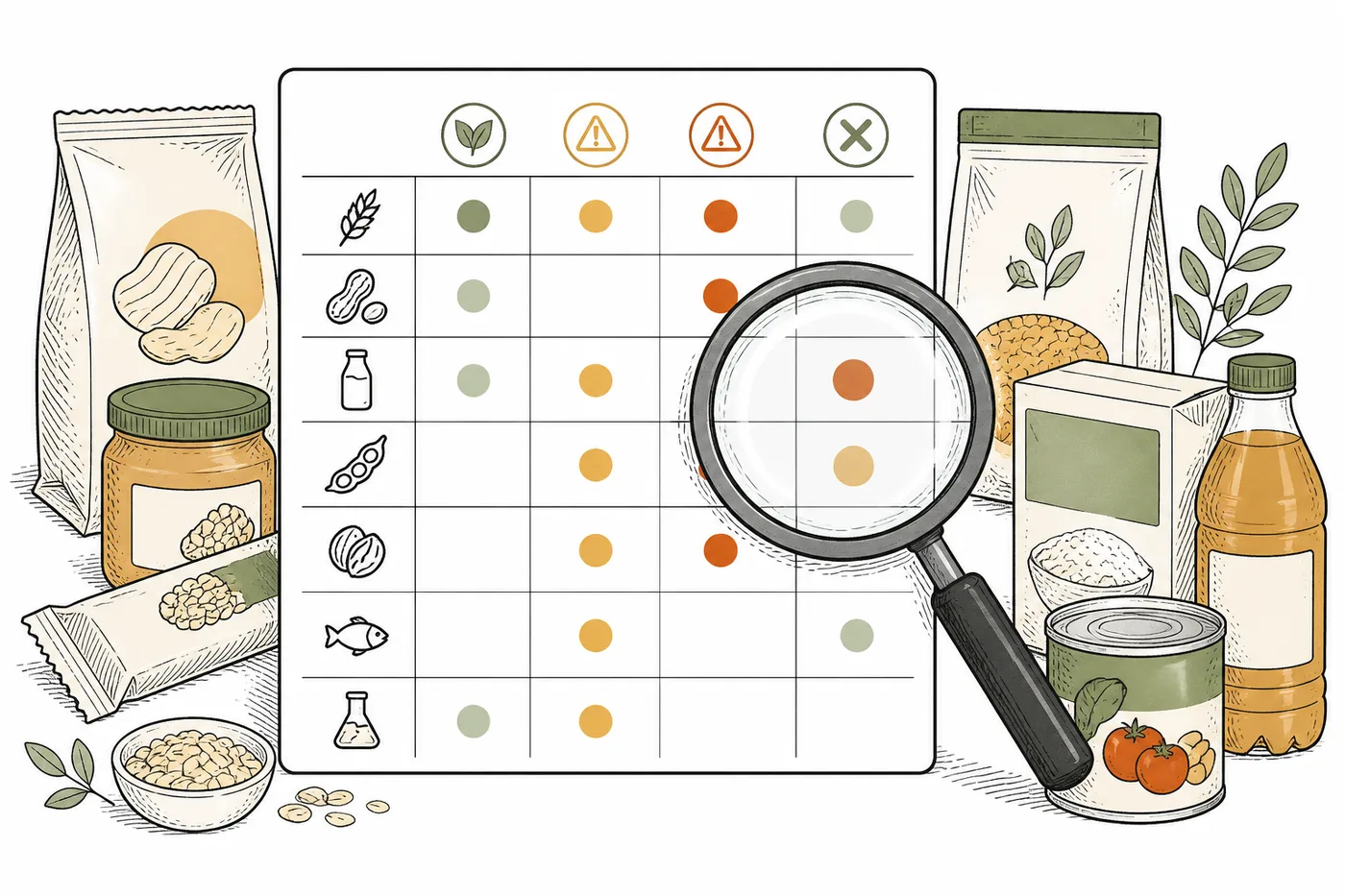
Ingredient risk map
Ingredient notes
Sodium Bicarbonate (Baking Soda)
This is a raising agent, not a nutrient feature. On a chocolate label, it signals formulation rather than food quality.
E500 (Sodium Bicarbonate)
This is the same ingredient listed again as an additive code. It reinforces that the product uses processing aids.
Cocoa Butter
Cocoa butter gives chocolate its smooth texture and richness. It is a normal chocolate fat, but it does not make the product a health food.
Milk
Milk can contribute protein, fat, and calcium. In this product, it is one part of a sweet confection rather than the main nutritional story.
Soy Lecithin (E322)
Soy lecithin is an emulsifier used to keep ingredients mixed. It is generally recognized as safe, but soy is a common allergen.
What to compare in store
- If you want a simple chocolate, compare labels for shorter ingredient lists and fewer additive-style ingredients.
- If sugar matters to you, compare this with chocolates that list less added sugar or use a smaller sweet filling.
- If you avoid soy, look closely because soy lecithin is included here as an emulsifier.
- If you want more nutrition from a snack, compare it with foods that offer protein, fiber, or nuts instead of mostly confectionery ingredients.
Better label signals
- A shorter ingredient list on a chocolate product.
- Less emphasis on added sugars.
- More whole-food ingredients such as nuts, seeds, or higher cocoa content, if that is the goal.
- Clear allergen labeling if soy or milk is a concern.
Scan the label before you buy.
Blume reads food labels, flags ingredients, and gives each product a plain-English score so you can compare options in the aisle.
Download BlumeFAQ
Is Cadbury Caramello a source of calcium?
It contains milk ingredients, so it can contribute some calcium, but it is still primarily a sweet chocolate product.
Why does this score so low?
The score reflects the product's added sugars, ultra-processed profile, and limited nutritional value compared with the amount of sweet confectionery content.
Does soy lecithin mean the product is unsafe?
No. Soy lecithin is a common emulsifier and is generally recognized as safe, but it matters if you avoid soy because of allergy or preference.
Sources and method
Product and ingredient signals come from the Blume product database. The label-reading context below is included on every product report so the article stays tied to public food-label rules.
- FDA Daily Value guide: The FDA says 20% DV or more is high and 5% DV or less is low for a nutrient on the Nutrition Facts label.
- FDA ingredient list guide: The FDA explains that ingredients are listed in descending order by weight on food labels.
- FDA major allergen update: Sesame became the ninth major food allergen in the United States on January 1, 2023.
- FAO NOVA classification overview: The NOVA system classifies foods by the extent and purpose of processing.